
Real Car Driving: Racing Sim
Racing Games - Make it for funRacing
4.558.00 Reviews
- Version
- 1.9.7
- Installs
- 10.00M
- Age Rating
- Everyone 10+
Screenshots
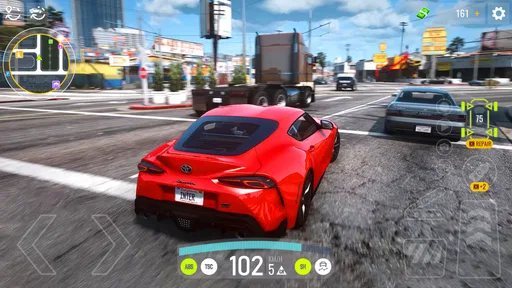
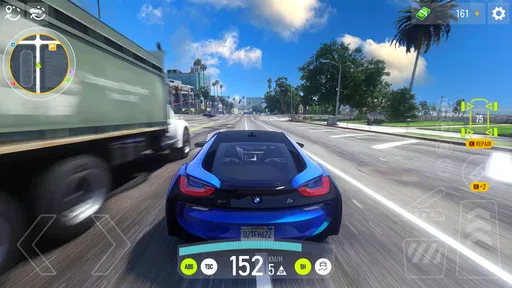
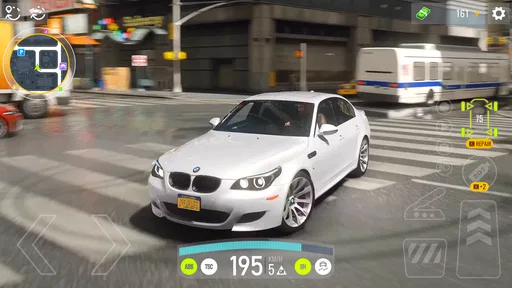
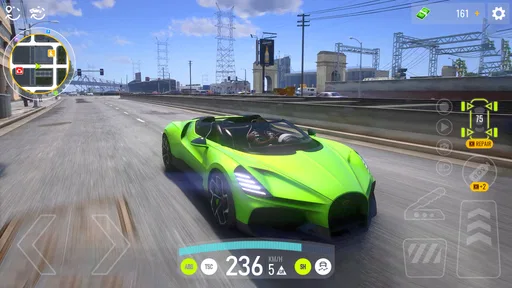
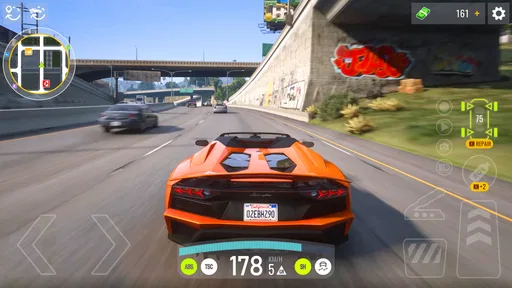
Our Review of Real Car Driving: Racing Sim
 Analysis by Appyee
I approached Real Car Driving: Racing Sim as a racing game for people who want more than a quick arcade lap. Its appeal is easy to understand: driving-focused play, car adjustment, realistic physics, and direct competition with rivals. What matters in daily use, though, is how comfortably those ideas come together on a phone and whether the game remains manageable for different players, situations, and levels of motor or sensory comfort.
The game is free to install, belongs to the Racing category, and comes from Racing Games - Make it for fun. It has reached over 10 million installs and holds a 4.5 average from around 14 thousand ratings, which suggests that its basic driving formula has found a substantial audience. I found it most interesting when I treated it as a short-session driving game rather than expecting a complete console-style simulator.
How the driving experience works in everyday play
I focus here on how the game’s driving physics and tuning shape a typical session, rather than treating every race as a test of speed alone. I find that the most useful way to approach it is to notice how a car responds, then make one change at a time; that turns trial and error into a clearer routine. From there, it helps to look at what that routine feels like in ordinary play.
Readability matters before the first race
In a racing game, clear information is as important as speed. I need to understand where the car is going, what the track is asking me to do, and whether a mistake came from my steering, braking, or tuning. Real Car Driving: Racing Sim puts that pressure into a compact mobile format, so the quality of the visual arrangement has a direct effect on enjoyment. A player who can read the road quickly has a real advantage over someone who needs more time to interpret the screen.
I recommend beginning with a calm test drive instead of immediately chasing the fastest result. That gives you a chance to learn the relationship between steering, acceleration, braking, and the game’s physics without treating every corner as a pass-or-fail moment. This is also a useful approach for younger players covered by the Everyone 10+ content rating, because the early learning period can be more enjoyable when it is not turned into a constant race against the clock.
The tuning side adds a second layer of decision-making. Rather than changing everything at once, I would adjust one part of the car, drive again, and pay attention to what actually changed. That simple workflow prevents a common problem in racing games: spending time on upgrades while losing track of which setting helped. It also makes the game more readable for players who prefer a step-by-step routine instead of a large set of unexplained choices.
One practical limitation is that mobile racing interfaces can become visually busy during a close race. Road position, rivals, corners, and controls all compete for attention. Players with reduced visual comfort, sensitivity to motion, or difficulty switching focus quickly may find a slower practice session much easier than a crowded competitive run. I would not choose this game expecting every screen to be equally relaxed or equally easy to parse.
Controls, timing, and different motor needs
Driving games ask for repeated, timed input. Small steering corrections can matter, and braking too late may turn a good run into a recovery exercise. For me, the most useful way to play is to keep movements deliberate: steer smoothly, begin braking before the corner feels urgent, and avoid making several changes at once. That habit is not only good for lap consistency; it also reduces the amount of frantic tapping and swiping required.
This creates a clear trade-off for players with limited dexterity, tremor, hand fatigue, or difficulty holding a precise position. A game built around driving can still be enjoyable, but the player may need shorter sessions and a less aggressive style. I would also avoid playing one-handed in a crowded environment unless the control layout feels comfortable, because divided attention makes precise racing harder than it first appears.
There is a useful distinction between wanting realistic vehicle behavior and wanting effortless control. The physics are part of the game’s identity, but they can make recovery from a mistake less forgiving than in a purely arcade racer. Someone who enjoys learning car behavior will probably appreciate that tension. Someone who wants instant turning, generous correction, and constant speed may prefer a simpler arcade alternative.
My best practical tip is to treat tuning as a way to reduce unnecessary control strain, not only as a way to chase a better result. If a car feels difficult to keep steady, a small, methodical adjustment may be more valuable than adding speed. I would test the vehicle on familiar sections after every meaningful change, because a setting that feels exciting on a straight can make cornering more demanding.
Sound, motion, and sensory comfort
Racing games naturally combine movement, visual acceleration, engine sounds, and sudden changes in direction. That combination can be energizing, but it is not comfortable for everyone. Players who are sensitive to motion or loud, repetitive audio should approach the game in short periods and stop when the presentation becomes tiring. I would not assume that a high-speed driving experience is automatically suitable for a long uninterrupted session.
For players who rely more heavily on visual information than sound, the important question is whether the road, car position, and race events can be followed without depending on audio cues. I found it sensible to learn the visual rhythm of the track first, then use sound as extra feedback rather than as the only warning. This makes the game more manageable in places where audio is unavailable, distracting, or inappropriate.
The same advice helps in shared spaces. A quick race during a commute, in a waiting room, or beside someone watching television may be possible, but the player should expect less concentration and less control precision. Racing requires attention at exactly the moment a notification, conversation, or movement nearby can break focus. In those situations, the game is better suited to a short practice run than to a serious attempt at a difficult rival.
Situational access: when the game fits best
Real Car Driving: Racing Sim works best when I have a few uninterrupted minutes and can hold the phone comfortably. A short session can provide a clear goal: learn a corner, compare a tuning change, or try to stay ahead of a rival. That makes it more practical than a game that demands a long campaign before anything meaningful happens.
A realistic everyday scenario would be playing at home after work, with the phone supported in both hands and enough quiet to concentrate. I would begin with a familiar car, run a practice attempt, and only then try a more competitive race. This sequence keeps the session from becoming a string of rushed restarts and also gives players with slower reaction times a fairer way to learn.
It is less suitable for moments when attention must remain available for something else. I would not play while walking, crossing a street, supervising a child, or handling any task that requires immediate awareness. The game’s racing focus makes split attention particularly costly: one glance away can be enough to lose control, and repeated interruptions can make the experience feel frustrating rather than relaxing.
The minimum operating requirement is Android 8.1, and the current version is 1.9.7. Those details make the game approachable for many Android users, but compatibility is only one part of the decision. A phone’s screen size, touch responsiveness, battery condition, and ability to remain comfortable during play can matter just as much. I would check those practical factors before deciding whether the game is right for a particular device or player.
What the rating and business model mean in practice
The game is free, which makes it easy to try without committing money at the start. It includes in-app purchases ranging from $0.99 to $18.99 per item, so I would treat optional spending as something to plan rather than something to discover accidentally during an enthusiastic session. Anyone sharing a device with children should be especially deliberate about purchase controls and expectations.
The Everyone 10+ rating gives families a useful starting point, but an age label does not explain whether the driving pace, competitive pressure, or purchase structure will suit a particular child. I would let a younger player try the basic driving first and then decide whether the tuning and rival-focused elements remain enjoyable without pressure to spend.
The developer name, Racing Games - Make it for fun, clearly points toward a focused driving project rather than a broad collection of unrelated activities. That focus is welcome when I want to get into a car and race, but it also means the game should be judged primarily on the quality of its driving loop. Players looking for story-heavy progression, social features, or a large variety of non-racing activities may be happier with a different type of mobile game.
Where it differs from simpler racing alternatives
Compared with a conventional arcade racer, this game’s emphasis on realistic physics and car tuning makes each vehicle feel more like something to learn than a disposable tool for reaching the finish line. That can create stronger satisfaction when a change works, but it also asks for patience. If you dislike adjusting your approach after a poor corner, the extra realism may feel like friction instead of depth.
Compared with a full simulation experience, a phone game is naturally more convenient for short sessions. I can pick it up without setting aside a long block of time, and the mobile format suits quick experiments with driving style or tuning. The compromise is that a touch-screen setup may not provide the same physical confidence as dedicated controls. Players who already own a console, wheel, or highly specialized racing setup may prefer that equipment for serious simulation.
The strongest comparison is therefore not about which game is universally better. Choose this one if you want a free, accessible entry into physics-led driving and enjoy improving through repetition. Choose a lighter arcade racer if you want immediate turns and minimal adjustment. Choose a deeper simulation platform if you want extensive realism and are willing to accept a larger time and equipment commitment.
Remaining barriers I would consider first
The biggest barrier is the combination of speed and touch control. Even when the game is technically easy to start, controlling a car consistently can demand concentration, fine movement, and quick correction. Players with motor limitations may need to experiment with their grip, posture, and session length, but the experience will not necessarily become comfortable for everyone.
Visual and sensory load is another concern. Fast road movement and competitive situations can be tiring, particularly for players who are sensitive to motion or who need more time to process changing information. I would use the game in a stable seated position, take breaks between attempts, and avoid judging the whole experience from one rushed session.
There is also a learning barrier around tuning. The ability to change a car is valuable, but it can turn a simple race into a trial-and-error exercise. My advice is to keep a tiny personal record in your head or notes: what changed, which track section improved, and whether the car became harder elsewhere. That prevents the common mistake of confusing a faster straight-line feeling with a genuinely better setup.
Finally, optional purchases can create a different kind of pressure. The free entry is a strength, but players who are easily tempted by upgrades should decide their spending limit before playing. For me, the best experience comes from treating purchases as strictly optional and focusing first on learning the car already available.
Who should try it, and who should skip it
I would recommend it to players who enjoy racing games with a little more weight behind the driving. It is a good fit for someone who likes testing a car, repeating a difficult section, and noticing how a small change affects control. It also suits people who want a free mobile racing game that can be played in compact sessions rather than a long, uninterrupted campaign.
I would be more cautious recommending it to someone who wants a completely relaxed game, has difficulty with rapid touch input, or becomes uncomfortable with motion-heavy presentation. It may also disappoint players seeking a broad motorsport package with extensive non-driving content. In those cases, a slower or more arcade-oriented alternative could be kinder to the player’s attention and hands.
For families, the Everyone 10+ rating is a helpful boundary, but I would still supervise the first session and explain that in-app purchases exist. For players with accessibility needs, I would frame the game as worth testing rather than assuming it will work equally well for every ability. Comfort depends on the player’s control precision, visual tolerance, device setup, and willingness to use short sessions.
My inclusive verdict after spending time behind the wheel
Real Car Driving: Racing Sim has a clear identity. It is not simply about reaching the finish line as quickly as possible; it asks me to understand the car, manage control, and make tuning choices that affect the way a race feels. That gives it more personality than a basic pick-up-and-play racer, while still keeping the entry point simple because it is free to try.
Its approach to different abilities is practical rather than comprehensive. A patient player can reduce pressure by practicing, making one adjustment at a time, choosing shorter sessions, and playing in a stable environment. Those habits improve comfort and clarity, but they do not remove the underlying demands of touch steering, rapid visual processing, and motion-heavy racing.
My recommendation is to try it when you want a focused driving challenge, not when you need a completely low-effort experience. The 4.5 average and more than 10 million installs show that its central idea connects with many players, but personal fit matters more than popularity here. If realistic-feeling control, car tuning, and rival pressure sound appealing, this is a worthwhile free download. If comfort, simple controls, or minimal sensory demand come first, I would look toward a gentler racing alternative.
In my experience, the game is at its best when I give it room to be learned instead of rushing it. Set aside a quiet moment, test the car before spending money, change only one thing at a time, and pay attention to how your hands and eyes feel. Used that way, it offers a satisfying mobile racing routine while remaining honest about the concentration and control it asks from the player.
Verdict
Strengths of Real Car Driving: Racing Sim
- Responsive steering and braking make driving feel engaging.
- Wide selection of cars gives players room to experiment.
- Open environments provide freedom beyond standard track races.
- Vehicle upgrades add useful progression between driving sessions.
- Simple controls make it approachable for casual mobile players.
Limitations of Real Car Driving: Racing Sim
- Some cars and upgrades may require substantial in-game grinding.
- Traffic behavior can feel predictable during longer drives.
- Graphics quality varies noticeably between vehicles and environments.
- The driving physics may feel too forgiving for simulation fans.
- Ads can interrupt play and reduce the sense of immersion.
Other Releases by Racing Games - Make it for fun
View All
Real Moto Driving Racing World
Racing4.5
Similar Picks in This Category
View All
Hill Climb Racing
Fingersoft4.3

Dr. Driving
SUD Inc.4.2

Traffic Rider
skgames4.5

Asphalt 8 - Car Racing Game
Gameloft SE4.6

Race Master 3D: Car Racing
Beresnev Games4.6

Extreme Car Driving Simulator
AxesInMotion Racing4.3
Frequently Asked Questions
What is Real Car Driving: Racing Sim?
Real Car Driving: Racing Sim is a mobile driving game focused on realistic road experiences, racing challenges, and vehicle control. After testing it, I found that it combines open-road driving with competitive activities, allowing players to practice steering, braking, drifting, and acceleration. It is aimed at users who enjoy car simulators but still want accessible gameplay suitable for shorter sessions.
Can I play Real Car Driving: Racing Sim offline?
The game may offer some driving content without a constant internet connection, but availability can depend on the specific mode, device, and version installed. In my experience with similar mobile racing simulators, online features such as advertisements, rankings, updates, or certain events usually require internet access. It is best to launch the game once while connected before relying on offline play.
Does Real Car Driving: Racing Sim support realistic controls?
Yes, the game is designed around driving controls that can feel more involved than a simple arcade racer. Players generally have access to options such as touch steering, buttons, or motion controls, depending on the version and device. The handling takes some practice, especially when braking into corners or controlling speed, but the settings make it possible to adjust the experience to your preferred style.
Are there many cars and customization options available?
Real Car Driving: Racing Sim includes a selection of vehicles and progression features intended to keep the driving experience engaging. The exact number of cars, upgrades, paint options, and unlockable items may vary after updates or between platforms. Some content can require in-game progress, advertising, or purchases, so users should review the available options before expecting every vehicle or customization feature to be immediately accessible.
Is Real Car Driving: Racing Sim free to download and suitable for my phone?
The game is generally available as a free download, although it may include advertisements, optional purchases, or extra content. Performance depends on your phone or tablet, particularly its processor, memory, graphics capability, and available storage. On older devices, you may notice longer loading times, reduced visual quality, or occasional frame-rate drops. Check the store requirements and permissions before installing.
Play our best games!


